Feeling overwhelmed? You’re not alone
If you’ve reached the point where you’re thinking, “I need a website for my business,” you’re already ahead of a lot of people.
But the next step is where most business owners get stuck.
Do you build it yourself?
Do you hire someone?
What platform do you use?
What actually needs to go on it?
The reality is, a website isn’t just something you “have” anymore. It’s one of your most important business tools — and when done properly, it should be bringing you leads, enquiries, and sales.
This guide will walk you through where to start, without the fluff.
Step 1: Get clear on what your website actually needs to do
Before you even think about design or platforms, you need clarity.
Your website isn’t just there to “look good.” It needs a job.
For most small businesses, that job is:
- Generate enquiries
- Drive phone calls
- Capture leads
- Sell products or services
Ask yourself:
“What do I want someone to do when they land on my website?”
If you don’t answer this first, everything else becomes guesswork.
Step 2: Secure your domain name and hosting
This is your foundation.
Your domain name is your digital address (yourbusiness.com.au), and your hosting is where your website actually lives.
Keep it simple:
- Choose a domain that matches your business name if possible
- Stick with a .com.au if you’re targeting Australian customers
- Use reliable hosting (speed and uptime matter more than you think)
A slow or unreliable website will cost you enquiries before people even see what you offer.
Step 3: Decide how you’re going to build it
This is where most people go down the rabbit hole.
You’ve got options like:
- DIY builders (Wix, Squarespace, GoDaddy)
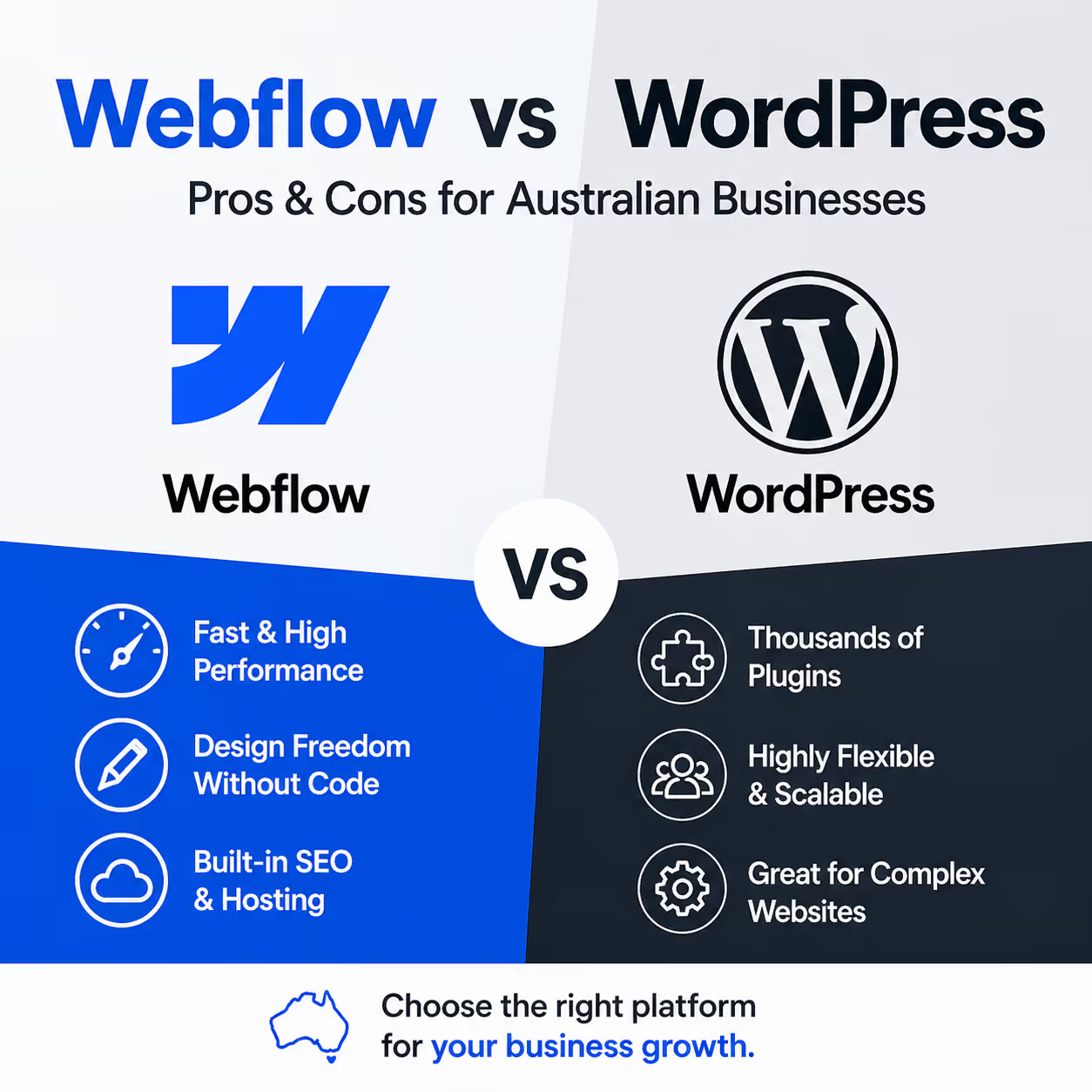
- WordPress
- Webflow
- Hiring a professional
At first glance, DIY builders look like the easiest option. And for very basic needs, they can work.
But here’s what usually happens:
- The design feels generic
- It doesn’t convert visitors into leads
- SEO is limited or poorly set up
- You outgrow it quickly
That’s when people end up rebuilding their site properly later — costing more time and money.
Step 4: Structure your website properly
A good website isn’t just a homepage.
At a minimum, most businesses should have:
- Home
- About
- Services
- Portfolio or Work (if relevant)
- Contact
Each page should have a clear purpose.
Your homepage should quickly answer:
- What you do
- Who you help
- Why someone should choose you
If a visitor has to “figure it out,” they’ll leave.
Step 5: Focus on conversion, not just design
This is where the difference between a basic website and a high-performing one really shows.
A good-looking website is nice.
A website that generates enquiries is what actually matters.
Key elements that make a difference:
- Clear headings and messaging
- Strong calls-to-action (like “Get a Free Quote”)
- Fast load speed
- Mobile optimisation
- Trust signals (reviews, testimonials, past work)
Most DIY websites miss this completely.
Step 6: Don’t ignore SEO from the start
SEO (Search Engine Optimisation) is what helps people find you on Google.
And it’s much easier to build it in from the beginning than fix it later.
At a basic level, your site should:
- Target the right keywords (e.g. “website design Emerald QLD”)
- Have proper page titles and meta descriptions
- Be structured clearly for search engines
- Load quickly and perform well
Without this, your website is basically invisible.
Step 7: Know when to bring in a professional
This is the part most people realise after trying to do it themselves.
Building a website isn’t just about putting pages together — it’s about:
- Strategy
- Structure
- Design
- Performance
- SEO
- Conversion
You can absolutely try to piece it together yourself.
But if your goal is to:
- Look professional
- Stand out from competitors
- Actually generate leads
Then having it done properly from the start saves a lot of time, frustration, and rework.
Get your website done properly from the start
If you’re at the stage where you know you need a website, the next decision is how you want it done.
You can spend weeks (or months) figuring it out yourself…
Or you can have it planned, designed, and built properly — with everything set up to actually grow your business.
Final Thoughts
Starting a website for your business doesn’t need to be complicated — but it does need to be done with the right approach.
The biggest mistake most business owners make isn’t building a website…
It’s building one that doesn’t actually do anything for their business.
If you treat your website as a growth tool instead of just an online presence, you’ll get far more out of it in the long run.




%20-%20Square.avif)